What is Mining?
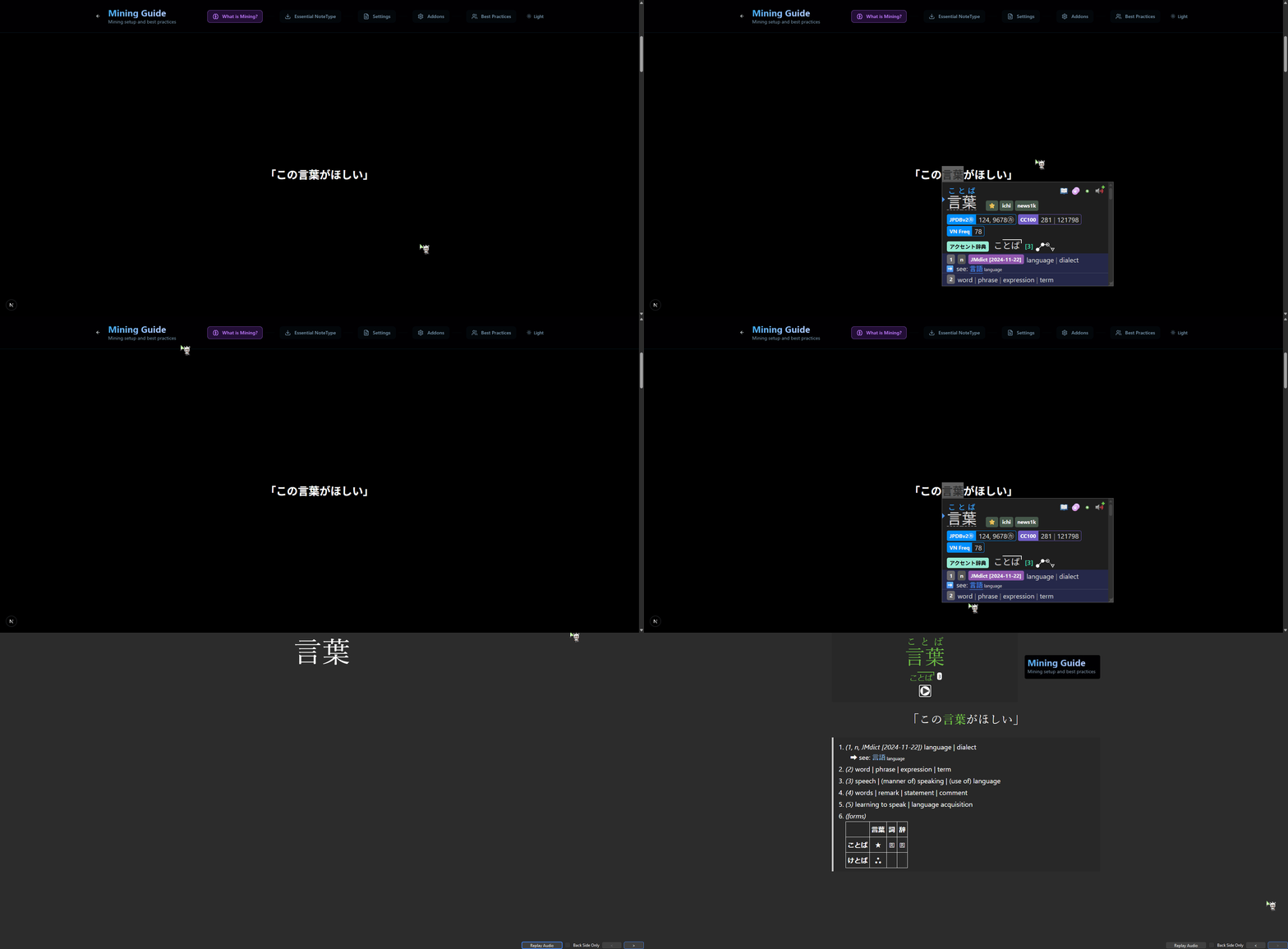
Mining is the way of building up vocabulary with immersion and the creation of your own deck and flashcards through tools like Yomitan, JL and custom Anki notetypes
「この言葉が学びたい」

I want to learn that word
To improve your fundamental understanding of this page and immersion learning, we highly recommend reading our Immersion Guide before proceeding
Notetypes
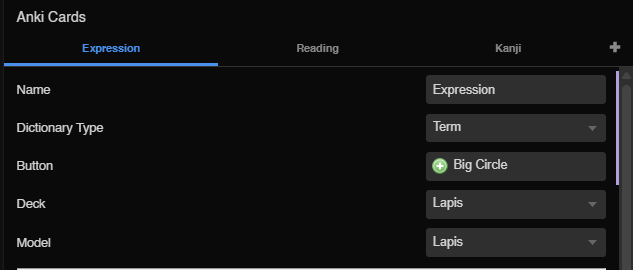
Choosing a notetype is the first step to build your own vocabulary deck! For such, we recommend Lapis, an advanced yet lightweight Anki notetype, thoughtfully designed to be fast, feature-rich, and compatible


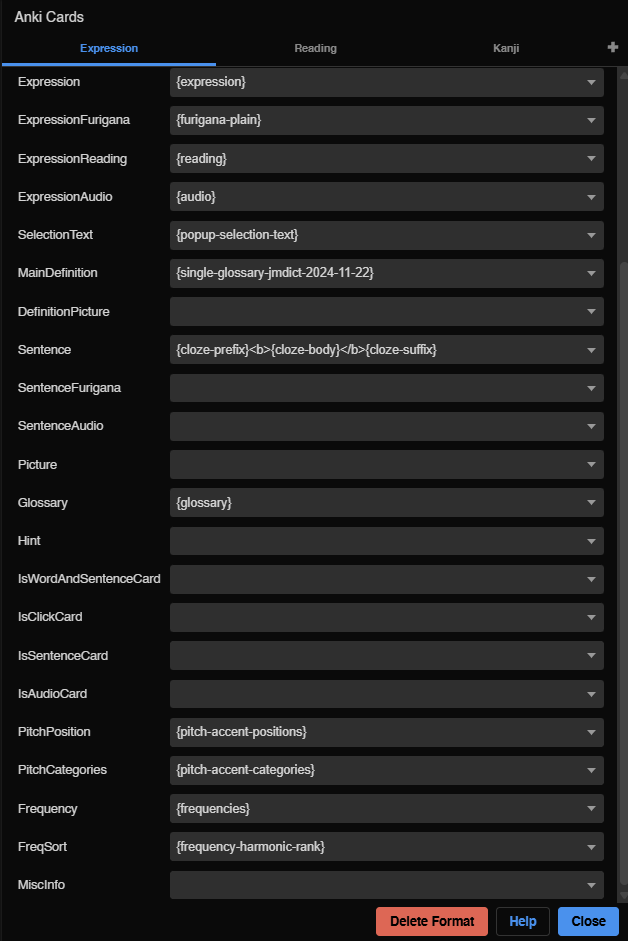
Yomitan Settings
Optimize Yomitan settings for Anki integration
Prerequisites
"Advanced" toggle is turned on in Yomitan
You can find it on the bottom left of the page, right above "About Yomitan"Anki Connect addon is already installed
Code: 2055492159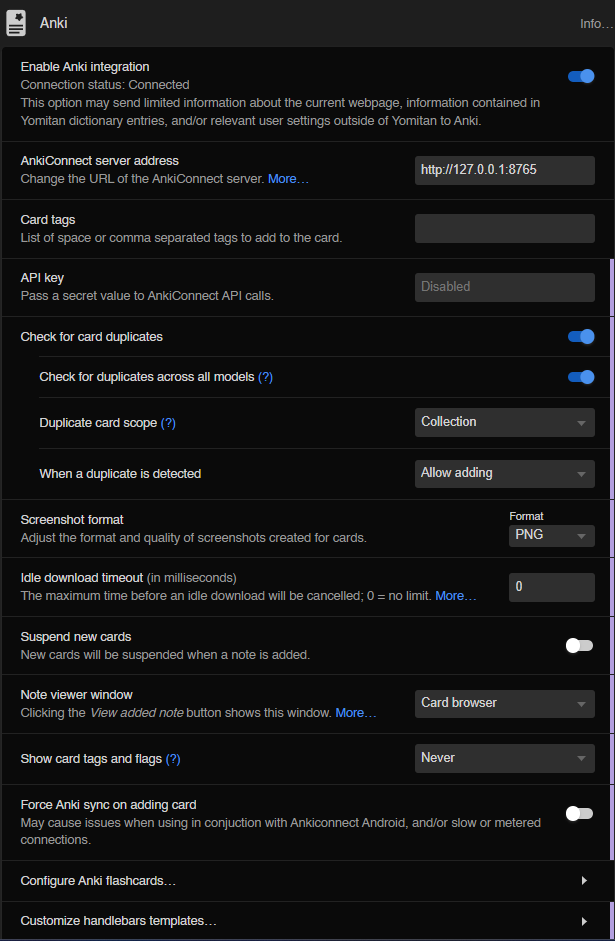
Images & ShareX
You can strengthen your memory of an expression by creating as many associations with the card as you can—most prominently adding meaningful pictures and screenshots to the back of the card. Meaningful here means anything that triggers YOUR memory of the scene or emotion easily
Get Started with ShareX
ShareX is an automated tool used mainly to take and send screenshots and audio recordings to Anki cards in a very fast and convenient way
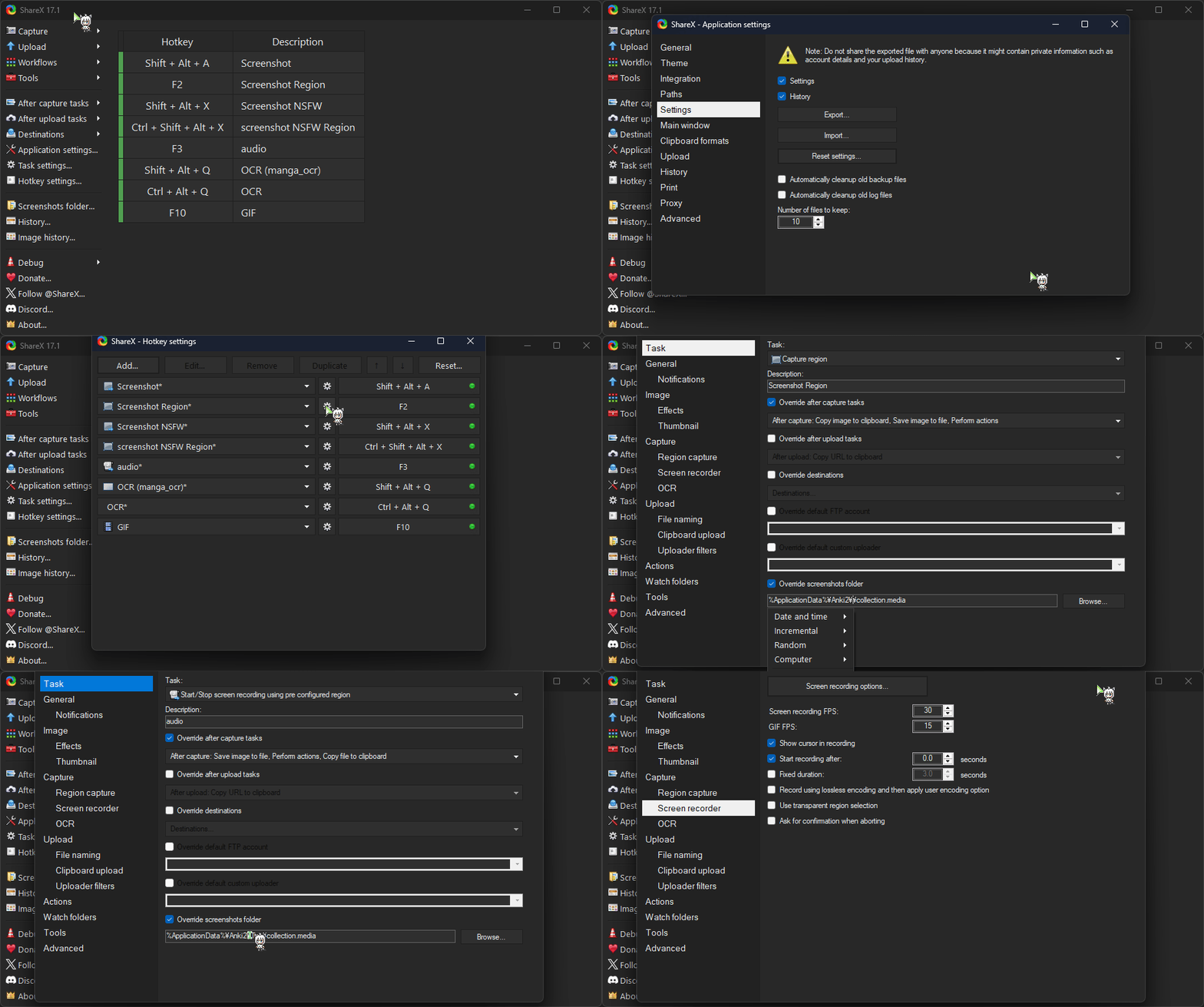
Download ShareX and import the pre-configured settings to get started!

Import Settings
Import the settings with ShareX > Application Settings > Settings > Import > Ten.shx
Hotkeys
For each hotkey, you will need to click the gear icon and change the Anki profile name written in the path the screenshots will be sent to
Substitute "Ten" with your Anki profile name in %ApplicationData%\Anki2\**YourAnkiProfileName**\collection.media
Profile name is written on the top left bar of Anki, or File > Profile to set
Be free to change any of the hotkeys!
Audio
To set it up, go to Hotkey settings > audio > screen recorder > screen recorder options
• Install recorder devices
• Audio source: virtual-audio-capturer
Important Notes
Add/Mine the word on Yomitan first before using the screenshot or audio record hotkey via ShareX
Make sure Anki is running to see the Add(+) button
What To Mine
Context is key, since the greater impression an expression/context has on you, the easier you will remember a word in Anki.
Mine
Words with unknown kanji or new reading of a known kanji
If you understood the sentence but found a word that you can't read and it's not a name, mine it.
Do Not Mine
Proper nouns and names
Avoid mining personal names, place names, and other proper nouns. These vary greatly, making them a poor source to learn new kanji.
Up to You
Words you can partially read
If you had trouble reading the word but knew the kanji, it's up to you to mine it or not.
How To Mine
The process of creating your own cards
Discovery
Following the information present in 'What to Mine' and 'Best Practices' sections, hover over the word/sentence you would like to mine
Mining
Using a dictionary tool that allows mining, such as JL's mining mode or Yomitan, click on the (+) button to mine
Media
Use ShareX, ASB or other tools depending on what type of content you are mining to add an image or other media to the card
Cognitive Decision Loop
Read through the sentence and check what you understand. If there is something you don't know in a sentence or are unsure about then use Yomitan. After doing so reread the sentence, or the part that you didn't understand, with the information you looked up and see for yourself if you can understand the sentence now. If you can; mine it and move on. If you can't; spend more time trying to understand the sentence and, if you still can't understand the sentence, no problem, move on and continue your immersion.
Now rinse and repeat these steps for all sentences! This is mining!
Read through the sentence normally. Don't panic.
You read through the sentence like you would do in your native language. This doesn't mean as fast as you can. Here you read attentively and make sure you have actually read over everything, while thinking along, trying to imagine what the sentence is saying.
You may as well take mental notes as in noticing what you maybe didn't understand immediately in the sentence.
Whitenoising
After reading a sentence for the first time, if you don't understand a sentence and still move on to the next sentence then that's considered whitenoising.
Moving on without having tried to understand a sentence is whitenoising and should be avoided at all costs. You learn nothing by just glossing over a sentence or letting something play in the background without paying attention. It's just a time waste.
Checking yourself is a good habit
Whitenoising happens to everyone, but confident people are the most prone. Confident people think they might know a word and don't bother checking themselves and move on, which can backfire. This can get to a point of learning words wrong. For example you might think you know a word because you have seen it being used so much, but actually don't know what it means. You think you know but you actually don't so you basically gaslit yourself into thinking you do. This doesn't mean you should check yourself always when immersing but once in a while doesn't hurt to decrease cases like these to occur.
On the other hand people who doubt themselves are not really prone to whitenoising because when they see an unfamiliar expression they usually opt to look it up. The same holds true for things they are unsure about, so naturally they spend more time with each given sentence.
Being confident is not bad, it doesn't hurt being confident in your ability, but it doesn't hurt as well looking things up you think you know to check yourself, occasionally. Both are good qualities but only in moderation. Be a confident and doubtful person! Check yourself once in a while!
Flowing while immersing
If you think you know a word it's most often better to check yourself once in a while by quickly looking it up with Yomitan. Otherwise you will experience learning a word wrong that you thought you knew. Being doubtful of yourself can be one's superpower but pausing too much to check yourself can break your immersion in whatever medium. There is this balance you should try to keep and to illustrate this let's talk about the flow in immersion.
We can rewrite the steps we have outlined for the process of mining using the ratio discussed earlier: 80-85% of the time immersing should optimally be spent in pattern recognition (understanding sentences immediately) while 15-20% of the time we should spend in problem solving (pausing and trying to understand a sentence thoroughly).
Below is a small overview:
Understanding sentences effortlessly in real time without pausing or analyzing. This builds automatic comprehension, reading speed, and intuitive language feel.
Pausing your immersion to look up unfamiliar expressions, analyze tricky grammar, and synthesize meaning. Essential for growth, but should not disrupt natural flow.
“Pattern recognition mode” is the sweet spot where you flow, where you are immersed in whatever medium you are consuming at the moment without pausing i.e interrupting your immersion too often. Since it's hard to come by a lot of sentences after each other where we get sentences like i+1, reaching the flow state is rare. But let's strive towards it!
Arguably pattern recognition, understanding the language immediately, is more important for reaching a high level of proficiency than being able to problem solve, pausing and trying to break apart the language thoroughly. This is partly due to when you are in that “pattern recognition mode” you build automatic comprehension, you're not “translating for yourself in your head” but actually understanding just off the language. You build speed, fluency and an “intuitive feel” for the language. On the other hand when in “problem solving mode” you pause your engagement / immersion and start to analyze the language, for example with Yomitan, where you mostly understand content with new piece(s) of information.
Both are definitely needed! But here is a crucial difference in how you are engaging with content in the language. Beginners might rarely reach the “flow state” because they don't know as much about the language as an advanced lerner, so they spent more time in “problem solving mode”, which most often feels like a means to an end. The end being effortless and automatic comprehension, basically the ability to comprehend the language to their desired level, at the beginning mostly being a process of analyzing grammar and looking up unknowns. “I just need to immerse more and look up things I don't know, to stop the need of a conscious intermediary that is a dictionary”.
Whereas for advanced learners who already have a sufficient base in the language, the priority shifts from “I need to look up and mine more so I can get better” to “using the language to learn / experience something else”. Basically you stop “studying” the language and start “living” it instead.
Ultimately the balance between pattern recognition and problem solving is subject to change based on the person and what you are trying to achieve. The key is mindful off your habits, to check yourself occasionally when you think you know a word without breaking immersion too often. Remember that immersing is not just about learning but about experiencing the language and media through it as well. Keep immersing!
Best Practices
An approach focused on efficiency: notes and strategies on mining
Managing Your Backlog
As a beginner, it will be hard to find i+1 sentences and to be picky about what to mine, so focus on increasing your vocabulary by mining high frequency words while keeping the following concepts in mind, applying them when possible:
i+1 Sentences
Sentences that have only one unkown word are considered very good sentences to mine, because it will be easier to learn them due to the known context of the phrase and due to our brain being better at making stronger connections to content we already know. In contrast, it's not too recommended to mine multiple words from the same sentence. When you dont understand multiple words in a sentence, it's considered lower quality mining material, meaning it will be harder to make it stick. Ideally you want a sentence where you have a good grasp of the entire context except for the word you're trying to learn (i+1). Thats purely efficiency speaking though. If you have a really really cool scene that will stick in your head really well/its from a show you really love and you spent a long time understanding that sentence so you feel like it'll stick, then go ahead and mine it. But in most cases its best to just leave it and wait for the next phrase that will have the wanted word by itself.
Don't be afraid to not mine something, you will always come across that word again.
Backlog
Think about what words would give you the most benefit. You can only do so many new Anki cards per day, so it's important to pick the words that will improve how well/smoothly you're able to immerse the most.
- Limit backlog to ~1 week worth of new cards (you can figure out your own limit)
- Once your backlog reaches the limit don't mine anything unless you really want to
- Try to avoid works that are way too above your current level since it'll cause your backlog to keep growing
- Don't mine words in kanji if you don't see them written out in kanji (like seeing せい and mining 所為). If the word you are mining didn't show in the opposite form of what you are seeing, then there is no reason to mine it now in this opposite form since it likely won't appear like that in the media you are currently consuming
In the ideal case, you're consuming media that provides a healthy amount of challenge and you are coming across words you can't read at a healthy pace, naturally keeping your backlog at a < 1 week size.
By limiting your backlog size:
• it'll give you an opportunity to learn words/readings through immersion while you're not mining anything new, allowing you to be more picky/conscious about what you mine.
However, some people prefer mining a bigger Anki backlog. In this case, we recommend sorting it by frequency so that you learn the most common words first and make immersion smoother.
🔰 How to Order Your Backlog by Frequency:
Install "Advanced Browser" addon from AnkiWeb
In Anki, go to Browse
Right click header → Fields → select "FreqOrder"
Click frequency header to order from highest (1) to lowest (99999)
CTRL + A → Reposition → "Ok"
How to acquire new vocabulary & The role of Anki in language learning
Notes on language acquisition, Anki and immersion
Once you've finished Kaishi and built a foundation through immersion, you don't need Anki to learn every new word you encounter.
When the focus is on language learning and acquisition, not obscure words or tests/quizzes/exams:
Use Anki mainly to remember readings and improving your reading ability. For meanings, Anki and Yomitan can help with a vague understanding, which is enough at first. However, immersion is the main way you learn what a word actually means and how it's used. Seeing a word repeatedly across different contexts and the effect of comprehensible input gives you a much more complete understanding than memorizing a definition.
Too much reliance on Anki for meanings can create unnecessary work, make you dependent on Anki and lead you to spend time memorizing usages or words you rarely encounter.
Some learners even grade cards with only the reading of a word. The focus is to become able recognize words while immersing and let their meanings become clearer naturally through exposure.
Immersion is the most important part of learning Japanese. Anki should make immersion easier, not replace it. It helps you remember readings while Immersion teaches you meanings and usage.
Next Step: SRS & Anki Management
Now that you have your sentence mining workflow set up and new cards flowing in, learn how to manage Anki effectively in this new phase—ensuring sustainable review habits
Pace of Reviews
Understand how to properly pace the speed which you grade cards
Card Load
Understand how reviewing new mined cards scale and progress overtime
Dealing with Dread
Actionable tactics to clear backlogs and survive missed days
Handling Leeches
Understand how to deal with eventual leeches